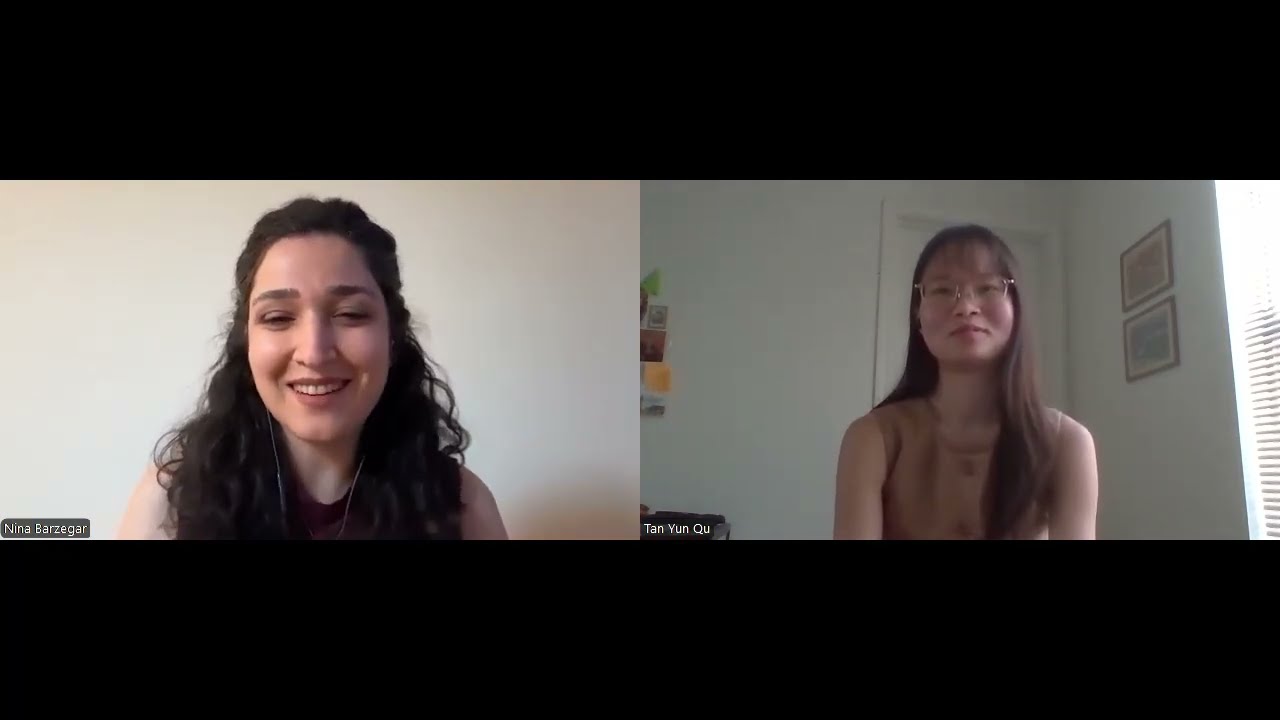
Good Times: Korean Experimental Music Festival - Interview
One composer is Nina Barzegar, an Iranian-born DMA candidate in Music Composition at UCSC. A composer, pianist, improvisor and actor, Barzegar eagerly awaits the show. “The approach of the music department at UCSC is kind of focusing on world music, and getting familiar with other traditions and their instruments,” Barzegar says.
UC Santa Cruz News: Korean Experimental Music Festival - Interview
“My piece is based on a traditional Iranian song that dates back more than a century,” she said. “Its subtle ornaments and expressions sound different on Iranian instruments, and when reimagined for Korean instruments, the new timbre feels fresh and beautiful. It’s like hearing a non-Persian speaker speak Persian—a familiar melody, yet transformed.”
But it was the penultimate Vulnerable by Nina Barzegar which was most fascinating for this listener.
The modal melody started with Mr. Thornton… and proceeded with microtonal, fluttering music which was evidently ‘Western’ but was constantly on the cusp of Persian delights.
I Care If You Lister: Review of Sirventès, featuring one of Nina Barzegar’s works
Nina Barzegar’s exquisite Vulnerable (2018) opens with quiet murmurs, delicate pizzicato chords, fragile harmonics, and marked silences — moments of conspicuous absence that hold both stillness and tension, broken only by sublime intonations from the solo cello. As the title suggests, this is a vulnerable moment for both the cellist (Thornton) and the composer, who must trust each other when the material is so direct and sparse.
Blogcritics: Review of Sirventès, featuring one of Nina Barzegar’s works
Nina Barzegar’s “Vulnerable” for solo cello plays out like a tragic short story, with episodes of pizzicato minimalism, frantic sawing, jumpy intervals and hints of rhythm all solidifying into a slow-burning narrative. It gripped me on first hearing and does so even more on subsequent listens.
Nina Barzegar’s world premiere “Inexorable Passage” was thrilling in its fusion of experimental, extended-technique effects, as well as melodic and chordal inventions.
Written for flute, clarinet, violin, cello and piano, the eight-minute “Inexorable Passage” felt packed, and moved along with momentum. The cello swerved in and out of mellifluous melody; each time its lines slid into heedless-sounding glissandos, you wondered if the center would hold. But Barzegar’s compositional command kept it together. (Trained as a pianist and composer at the University of Tehran, she’s now a doctoral candidate at University of California, Santa Cruz.)